MINOR+ – Platform for Interethnic Participation and Consultative Engagement
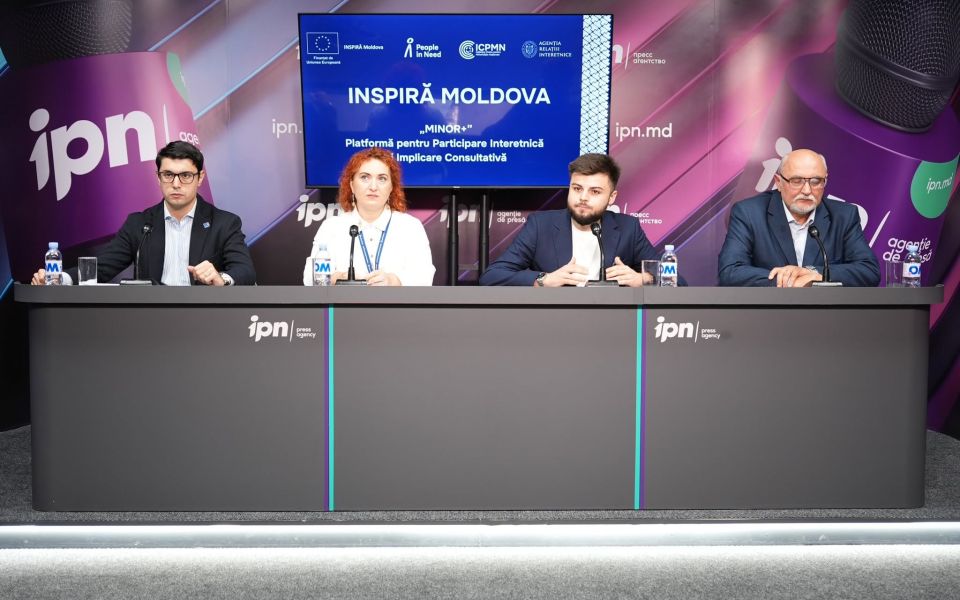
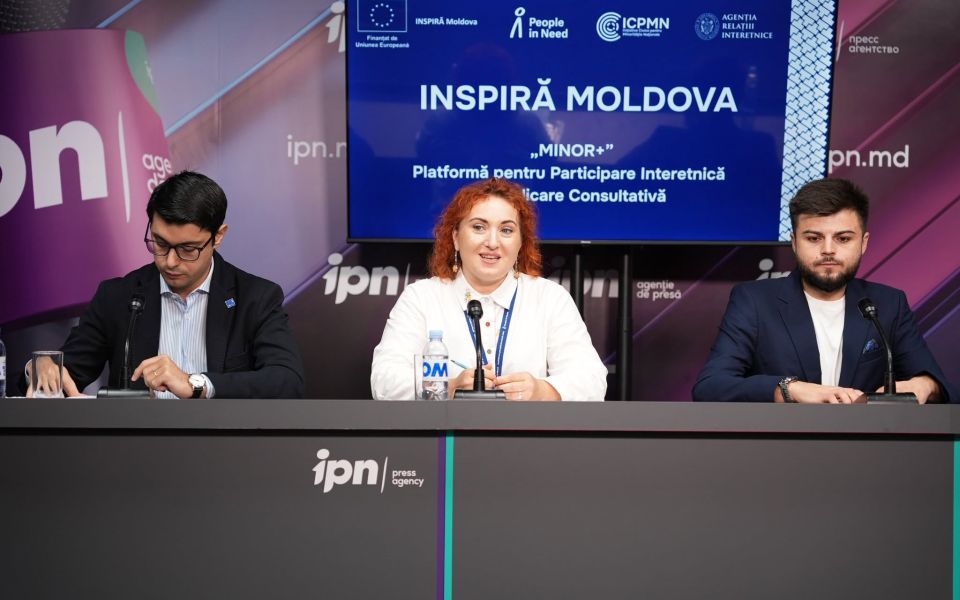
The “MINOR+ – Platform for Interethnic Participation and Consultative Engagement” project was implemented by the Centre for Civic Initiatives for National Minorities (ICPMN), with the support of the European Union, within a programme coordinated by the European Partnership for Democracy and its partners.
The project aimed to create and develop a multilevel mechanism in the Republic of Moldova for the participation of representatives of national, ethnic and linguistic minorities in decision-making processes and their interaction with public authorities.
Unlike traditional short-term public consultation formats, MINOR+ was built around an institutional approach: creating permanent consultative mechanisms at the local, regional and national levels through which representatives of ethnic communities could formulate their communities’ problems and proposals, interact with authorities and participate in discussions on public policies.
The problem addressed by the project
Despite the significant ethnic, cultural and linguistic diversity of the Republic of Moldova, the participation of national minority representatives in the country’s public and political life remains limited.
One of the key problems is the insufficient representation of ethnic communities in decision-making processes. Representatives of national minorities, particularly those living in rural and remote localities, often have limited opportunities for systematic interaction with state institutions, insufficient knowledge of existing mechanisms for civic and political participation and limited confidence in their ability to influence the decisions of public authorities.
A second systemic problem is the absence of a sustainable and institutionalised consultation mechanism between public authorities and national minorities. Existing interaction formats are often occasional and do not ensure that the needs of ethnic communities are consistently included in the development of public policies. As a result, national strategies and programmes may be developed without sufficient participation from the population groups they directly affect.
This problem is particularly acute at the local level. Many regions lack permanent platforms where representatives of ethnic communities, civil society, youth, educational institutions and local public administrations can regularly discuss existing problems and jointly identify solutions.
Another serious challenge is the low level of trust between some national minorities and state institutions. Bureaucratic distance, insufficient cultural and linguistic sensitivity in public services, limited access to information in languages understood by minorities and a lack of regular communication create a sense of alienation from the state and limit citizens’ participation in democratic processes.
This situation is particularly significant in the context of the European integration of the Republic of Moldova. As a candidate country for membership of the European Union, Moldova must ensure the effective protection of national minority rights, the inclusiveness of democratic institutions and opportunities for different population groups to participate in decision-making.
For this reason, MINOR+ was designed not as a series of separate activities, but as an attempt to create a functioning infrastructure for the participation of national minorities in decision-making processes.
Project objective
The main objective of MINOR+ was to create a sustainable, institutionalised and representative mechanism for constructive dialogue between public authorities and representatives of national, ethnic and linguistic minorities in the Republic of Moldova.
The project aimed to increase the civic and political participation of national minority representatives, strengthen trust between ethnic communities and state institutions and improve the inclusiveness and effectiveness of public policies in the context of Moldova’s European integration process.
To achieve this objective, the project worked simultaneously at several levels: with representatives of ethnic communities, young people, civil society, local authorities and national state institutions.
Creating local consultative mechanisms
One of the project’s central components was the establishment of local consultative councils in districts and municipalities of the Republic of Moldova with a significant presence of national minorities.
Activities took place in both the south and north of the country, including Comrat, Ceadîr-Lunga, Taraclia, Basarabeasca, Cantemir, Leova, Edineț, Glodeni, Ocnița and Drochia.
The consultative structures included representatives of national minorities, local public authorities, civil society, educational institutions, youth activists and local community leaders.
This format brought together representatives of groups that had previously interacted only occasionally.
The councils became platforms where representatives of local communities could raise specific problems affecting their localities, discuss them with public authorities, formulate recommendations and identify joint solutions.
Particular attention was paid to ensuring that the consultative structures did not become platforms reserved exclusively for existing local elites. The project introduced the principle of representation of different social groups, including women and young people. Its model required at least 40% participation by women and 30% participation by young people in the consultative structures.
Working directly in the regions
An important feature of MINOR+ was its decentralised approach.
Instead of organising most activities in Chișinău, the ICPMN team worked directly in regions inhabited by national minorities.
In the south, activities covered Comrat, Ceadîr-Lunga, Taraclia, Cantemir, Leova and Basarabeasca, while in the north they covered Edineț, Drochia, Glodeni and Ocnița. The initial process of establishing the consultative mechanisms and determining their composition took place directly within local communities.
Fieldwork made it possible not only to establish consultative structures, but also to hear directly about the problems faced by different ethnic groups, understand regional specificities and build relationships between community representatives and local authorities.
Educational programme for consultative council representatives
The creation of new structures alone does not guarantee effective citizen participation in decision-making. Therefore, a second important area of MINOR+ was building the capacity of national minority representatives and consultative council members.
An educational programme focusing on practical instruments for civic and political participation was developed for participants.
The training covered:
- civic and political participation;
- the rights of national minorities;
- advocacy and representation of community interests;
- participatory budgeting;
- interethnic dialogue;
- public policy monitoring;
- interaction with local and central authorities;
- European standards of inclusive governance.
The educational component focused not only on theoretical knowledge, but also on developing participants’ practical ability to identify community problems, formulate proposals, transform them into recommendations and promote them through dialogue with public authorities.
Representatives of ethnic communities were therefore viewed not only as beneficiaries of state policies, but also as full participants in their development.
Public dialogues with local communities
A separate component of MINOR+ consisted of regional public dialogues, which expanded participation beyond the members of the consultative structures.
During these meetings, representatives of national minorities, citizens, local authorities and civil society discussed the most pressing problems affecting their regions.
The public dialogues enabled consultative structures to collect feedback directly from residents and use it to formulate proposals and priorities.
In other words, the councils were expected not only to represent the positions of their members, but also to become mechanisms for communicating the needs of wider local communities to public authorities.
The project model provided for 10 regional public dialogues involving more than 400 citizens.
Developing the regional level of interaction
The next stage involved bringing local problems and proposals together at the regional level.
MINOR+ developed a model of two regional consultative structures—one for northern and one for southern Moldova.
Their task was to identify problems extending beyond one locality or district, consolidate proposals from local consultative councils and formulate common regional priorities.
This approach created a vertical system:
local community → local consultative mechanism → regional level → national state institutions.
This became one of the defining features of MINOR+: problems affecting national minorities were considered not only as separate local matters, but as part of a broader public policy system.
National level and interaction with state institutions
The final level of the system was a national consultation mechanism involving regional representatives, experts, civil society and state institutions.
The project placed particular emphasis on cooperation with the Agency for Interethnic Relations (ARI) as the central state institution responsible for policies in the field of interethnic relations.
The national consultative mechanism was designed as a permanent channel for communicating problems, proposals and recommendations from local and regional communities to the national level.
Through this mechanism, representatives of national minorities could move from discussing problems within their communities to interacting directly with state institutions and participating in public policy discussions.
The project also provided for direct consultation meetings between representatives of ethnic communities and the ARI, the Parliament of the Republic of Moldova and relevant ministries, allowing dialogue between minorities and the state to be transformed into concrete policy recommendations.
Developing long-term priorities
MINOR+ was not limited to the period of direct project implementation.
A model of Action Plans for 2026–2030 was developed for the consultative structures, defining the main problems, objectives, areas of activity, deadlines and responsibilities for implementing initiatives.
The project therefore created a foundation for the continued operation of consultative mechanisms after external funding ended.
Particular attention was paid to institutional sustainability, including the development of internal regulations, meeting procedures, mechanisms for preparing recommendations and formats for interaction with public authorities.
Young people and women as participants in decision-making
One of the important principles of MINOR+ was expanding the representation of groups that traditionally have fewer opportunities to participate in decision-making.
Particular attention was paid to young people from ethnic communities. They were involved in consultative mechanisms, educational activities, public dialogues and advocacy processes.
The project also applied a gender-sensitive approach. The consultative structures provided for meaningful representation of women, including activists from Roma, Gagauz, Bulgarian, Ukrainian and other ethnic communities.
MINOR+ therefore focused not only on ethnic representation, but also on who receives the opportunity to represent their communities and participate in decision-making.
MINOR+ and the European integration of the Republic of Moldova
The project was directly connected to Moldova’s European integration process.
The protection of national minority rights, equality, non-discrimination, citizen participation in decision-making and effective consultation mechanisms are important components of democratic governance and fulfilment of the political criteria for European Union membership.
MINOR+ translated these principles from international recommendations into practical regional work.
By creating consultative mechanisms, strengthening the capacity of community representatives and establishing direct channels of interaction with state institutions, the project contributed to a more inclusive governance model aligned with European principles of participation and representation.
As a result of the project:
- a multilevel model for national minority participation in decision-making at the local, regional and national levels was developed;
- local consultative mechanisms were created in regions with a significant presence of national minorities;
- representatives of ethnic communities, local authorities, civil society, educational institutions and youth were brought together;
- national minority representatives gained practical knowledge of advocacy, civic participation, minority rights, public policy and interaction with state institutions;
- regional public dialogues were organised to discuss directly the problems and needs of local communities;
- a model of interaction between the local, regional and national levels was created;
- direct communication channels between national minority representatives and public authorities were strengthened;
- particular attention was paid to the participation of young people and women in consultative and public processes;
- mechanisms were developed to transform local community problems into concrete recommendations for public authorities;
- institutional foundations were established for continuing the consultation process after project funding ended;
- the role of national minority representatives was strengthened not only as beneficiaries of state policies, but also as direct participants in their development and monitoring.
Long-term significance of the project
The main result of MINOR+ was a change in the approach to national minority participation.
The project was based on the principle that effective national minority policy should not be developed exclusively for minorities—it should be developed together with them.
MINOR+ therefore went beyond the traditional format of conferences, cultural activities or one-off consultations. The project created the foundation for a system in which a problem formulated by a resident or ethnic community representative at the local level could be discussed within a consultative structure, transformed into a concrete recommendation, communicated to the regional level and subsequently raised in dialogue with national state institutions.
This logic—from the local community to national public policy—became the central idea of MINOR+.
The project contributed to strengthening a culture of participation, dialogue and shared responsibility between state institutions and ethnic communities and created a practical model of more inclusive governance in the Republic of Moldova.
In the long term, MINOR+ laid the foundation for a transition from occasional consultations with national minorities to systematic and institutionalised participation, in which representatives of ethnic communities have permanent tools to express their interests, interact with public authorities and influence decisions that directly affect their communities.