Informing Ethnic Community Representatives about the 2024 Referendum
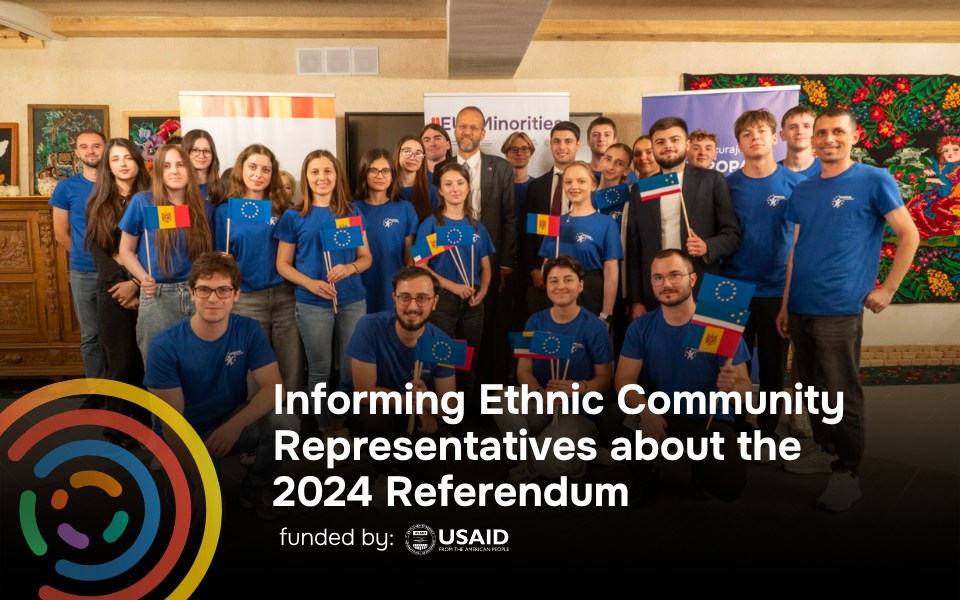
The “Informing Ethnic Community Representatives about the 2024 Referendum” project was implemented by the Centre for Civic Initiatives for National Minorities with the support of USAID-OTI-MRI.
The problem addressed by the project: Ahead of the 2024 Referendum in the Republic of Moldova, ethnic and national minorities, particularly those living in the southern regions of the country—Gagauzia, Taraclia, Basarabeasca and Cahul—were among the groups most vulnerable to disinformation and manipulation.
The information environment in these regions is largely shaped by external sources and politically biased media outlets that spread distorted or false narratives about the European Union, the integration process and the referendum itself. This contributes to distrust, fear and scepticism among the population and influences electoral behaviour.
An additional problem is the lack of accessible, clear and quality information in minority languages. A significant part of official communication is conducted in Romanian and does not fully reach representatives of ethnic communities, further widening the information gap.
There is also a low level of awareness regarding the substance of the referendum, its significance for the country’s future and the concrete benefits of European integration for different population groups. As a result, participation in democratic processes is reduced and the influence of disinformation is strengthened.
Thus, a situation emerged in which ethnic minorities:
- are systematically exposed to disinformation and propaganda;
- have limited access to reliable information in their native languages;
- are insufficiently involved in social and political processes.
The objective of the project was to increase ethnic minority representatives’ awareness of the 2024 Referendum, counter disinformation and manipulation and encourage informed and active participation in democratic processes through accessible content and direct communication with communities.
As part of the project, 16 videos were produced in 4 minority languages—Ukrainian, Gagauz, Russian and Bulgarian—aimed at explaining the substance of the 2024 Referendum, the European integration process and its benefits for citizens.
As part of this activity, the ICPMN team was fully responsible for developing content tailored to the specific interests of ethnic groups. Topics included the preservation of cultural and linguistic identity within the EU, opportunities for young people, business development and educational prospects.
The project also implemented the offline campaign “Minority Talk: EU Integration” in 10 localities with predominantly ethnic and linguistic minority populations, reaching a total of 450 people.
The “Minority Talk: EU Integration” campaign took place in rural localities in the districts of Taraclia, Basarabeasca, Cahul, Gagauzia, Drochia and Rîșcani.
In addition, the Centre for Civic Initiatives for National Minorities developed and distributed more than 15,000 informational brochures in minority languages. The brochures contained accessible explanations of the EU integration process, its concrete benefits for the population and recommendations on how to recognise disinformation.
As a result of the project, awareness among ethnic minorities of the 2024 Referendum and the European integration process increased significantly; access to reliable information in minority languages expanded in regions with high levels of information vulnerability; the influence of disinformation and manipulative narratives decreased through the provision of quality alternative content; citizens became more actively involved in social and political discussions and democratic processes; trust in independent information sources and civic initiatives was strengthened; direct communication between experts and local communities was established; and understanding of the benefits of European integration increased among different ethnic groups.